
Originally posted Jan 2024, updated Aug 2025
Are You Stuck in a Toxic Marriage Cycle? Here’s How to Know When It’s Time to Break Free
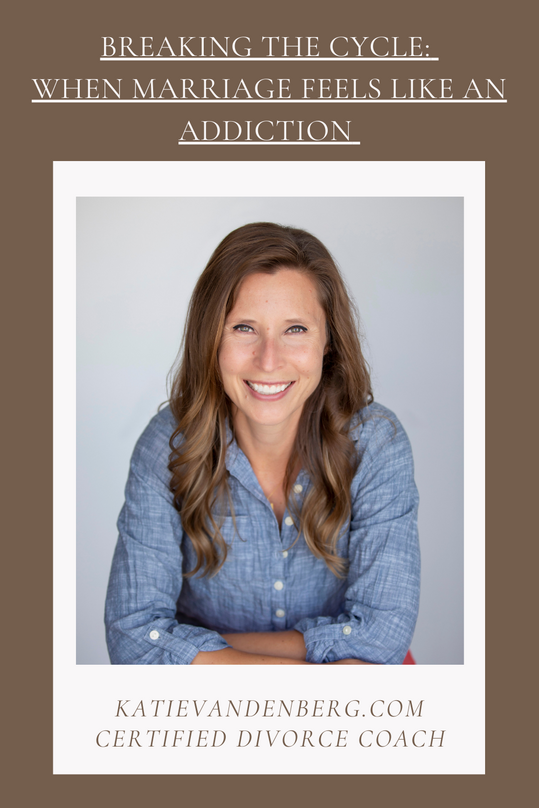
I have noticed a trend with some people in what I would consider a bad habit, and that’s an addiction to trying to save a marriage that is unsalvageable. It’s not unlike gambling. The marriage is filled with toxic attitudes and behaviors and is generally negative in spirit, but Every So Often there’s a glimmer of positivity. It’s like when the slot machines let you win JUST enough to convince you that the next pull might be the big one. But of course, it isn’t.
So you keep pulling (figuratively, of course) to keep your marriage together. Keep pulling to find that positive glimmer again. And you get JUST to the point where you are ready to quit and BAM there it is. A smile when you least expected it. Hand-holding. Flowers on the counter when you come home. A cuddle in bed when you haven’t touched in five months. And just like that you’re thrust back into the cycle.
Understanding the Psychology Behind Staying in an Unhappy Marriage
This cycle isn’t just emotionally exhausting—it’s psychologically damaging. When you’re contemplating divorce but feel paralyzed by uncertainty, your brain is actually working against you in some ways. The intermittent reinforcement pattern (those occasional good moments) creates one of the strongest psychological bonds possible. It’s the same mechanism that keeps people addicted to gambling, social media, or any other behavior that provides unpredictable rewards.
In marriage, this might look like:
- Weeks of tension followed by one romantic evening
- Constant criticism punctuated by occasional compliments
- Emotional withdrawal broken by sudden affection
- Arguments that end in passionate reconciliation
- Promises of change that temporarily materialize before disappearing again
If you’re reading this and thinking “this sounds exactly like my marriage,” you’re not alone. Thousands of people feel trapped in this cycle, wondering if they should get divorced but unable to break free from the pattern.
The Hidden Costs of Staying Stuck
When you’re stuck in this marriage addiction cycle, the costs extend far beyond your relationship. You might notice:
Emotional exhaustion: Constantly walking on eggshells, analyzing every interaction, hoping for the next positive moment while bracing for the next disappointment.
Decision paralysis: You know something needs to change, but you can’t decide if you should work on your marriage or pursue divorce. The uncertainty becomes its own kind of prison.
Identity loss: You’ve spent so much energy trying to fix your relationship that you’ve forgotten who you are outside of it.
Impact on children: Kids absorb tension even when parents think they’re hiding it well. They learn that this is what relationships look like.
Physical symptoms: Stress manifests in headaches, insomnia, digestive issues, and other health problems.
Isolation: You may have pulled away from friends and family, either from shame about your situation or because your spouse discourages outside relationships.
How to Know When Your Marriage Is Truly Beyond Saving

One of the most common questions I hear as a divorce coach is: “How do I know if I should keep trying or if it’s time to divorce?” It’s a heartbreaking question because it shows just how much pain someone is in, desperately seeking clarity in an impossible situation.
Signs Your Marriage May Be Unsalvageable
While every situation is unique, there are some clear indicators that your marriage may be beyond repair:
Lack of mutual effort: Real change requires both partners to be committed to growth. If you’re the only one doing the work, you’re not in a partnership—you’re in a one-sided relationship.
Repeated patterns without lasting change: Has your spouse promised to change multiple times but always reverts to old behaviors? Pay attention to patterns, not promises.
Fundamental incompatibility: Sometimes people grow in different directions. If your core values, life goals, or visions for the future are completely misaligned, love alone may not be enough.
Abuse of any kind: Emotional, physical, financial, or psychological abuse should never be tolerated. No amount of good moments can justify abuse.
Contempt and criticism: Research shows that contempt is one of the strongest predictors of divorce. If your interactions are characterized by eye-rolling, name-calling, and general disrespect, the foundation of your marriage may be irreparably damaged.
Loss of friendship: Can you genuinely say you like your spouse as a person? Do you enjoy their company? If the friendship is gone, the marriage often follows.
The Difference Between Marriage Problems and Marriage Ending
It’s important to distinguish between normal marriage challenges and relationship-ending issues. Every marriage has problems. Successful marriages are not problem-free; they’re relationships where both people are committed to working through problems together.
Marriage problems might include:
- Communication difficulties that both partners are willing to address
- Different parenting styles that can be negotiated
- Financial stress that requires teamwork to resolve
- In-law issues that can be managed with boundaries
- Intimacy challenges that both partners want to improve
Marriage-ending issues typically involve:
- One partner who refuses to acknowledge problems exist
- Repeated betrayals of trust without genuine remorse or change
- Fundamental disrespect for each other as human beings
- Different life visions that cannot be reconciled
- Abuse that creates an unsafe environment

Taking That First Empowered Step: Breaking Free from the Cycle
Like any addiction, you have to own your healing. You have to take charge. You have to WANT to get better. No one can force you to do it. No one will ever come to save you. You have to save yourself by taking that first empowered step.
What does that look like? That looks like saying “Enough is Enough.” There’s the phrase “stop throwing good money after bad” and I think that applies to emotions too. Stop throwing your good emotions, your good energy, your good time, after bad.
Practical Steps to Break the Cycle
Step 1: Acknowledge the pattern. Write down the cycle you’ve been experiencing. Document the highs and lows, the promises and disappointments. Seeing it on paper helps you recognize the addiction-like pattern.
Step 2: Set clear boundaries. What behaviors will you no longer tolerate? What are your non-negotiables? Write these down and commit to enforcing them.
Step 3: Create a support system. Reach out to trusted friends, family members, or professionals. The isolation that often comes with toxic relationships makes it harder to see clearly.
Step 4: Focus on what you can control. You cannot control your spouse’s behavior, but you can control your responses, your boundaries, and your choices.
Step 5: Consider professional guidance. Whether it’s individual therapy, couples counseling (if both partners are willing), or divorce coaching, professional support can provide clarity and direction.
Step 6: Develop an action plan. Whether you decide to work on your marriage or pursue divorce, you need a concrete plan with specific steps and timelines.
Overcoming the Fear of Taking ActionThe fear of making the “wrong” choice often keeps people paralyzed. But here’s the truth: staying stuck in a toxic cycle IS a choice. It’s choosing misery over uncertainty. It’s choosing the familiar pain over the unknown possibility of happiness.
Remember that taking action doesn’t necessarily mean filing for divorce immediately. It might mean:
- Setting and enforcing boundaries
- Seeking individual therapy
- Having an honest conversation about the state of your marriage
- Exploring trial separation
- Consulting with a divorce attorney to understand your options
- Working with a divorce coach to gain clarity about your situation
The key is movement. Any movement breaks the cycle of stagnation and puts you back in the driver’s seat of your own life.
When Divorce Becomes the Healthiest Choice
Sometimes, despite our best efforts and deepest love, divorce becomes the healthiest choice for everyone involved. This doesn’t mean you’ve failed; it means you’re choosing your well-being and often the well-being of your children over maintaining the status quo.
Divorce can be an act of self-love and courage. It can be choosing growth over stagnation, peace over chaos, authenticity over pretense. It can model for your children that they deserve healthy relationships and that it’s okay to make difficult choices in service of their well-being.
Planning Your Path Forward
If you’re ready to explore divorce as an option, here’s how to approach it thoughtfully:
Gather information: Understand your financial situation, legal rights, and options for your specific circumstances.
Consider your children: How will you prioritize their well-being throughout this process? What kind of co-parenting relationship do you want to create?
Build your team: This might include a divorce attorney, therapist, financial advisor, and divorce coach. Each professional serves a different role in helping you navigate this transition.
Focus on your vision: What kind of life do you want to create for yourself and your children? Let this vision guide your decisions throughout the divorce process.
Finding Clarity and Confidence in Uncertainty
The path forward isn’t always clear, and that’s okay. What matters is that you stop accepting a life that makes you miserable and start taking steps toward something better. You deserve a relationship built on mutual respect, genuine affection, and shared commitment to growth. If that’s not what you have, you have choices.
The first step is always the hardest, but it’s also the most important. It’s the step that says “I matter. My happiness matters. My children’s well-being matters. And I’m worth fighting for.”
Does this sound familiar to you? Have you lived this reality? I’d love to hear from you! And if you need help with that first empowered step, let’s get started with clarity and confidence.
Remember, you’re not alone in this journey. Thousands of people have broken free from toxic marriage cycles and created beautiful, authentic lives on the other side. Your story of transformation could be next.
If you’re feeling stuck in your marriage and aren’t sure whether to work on it or pursue divorce, professional guidance can help you gain the clarity you need. As a divorce coach, I help people navigate these difficult decisions with compassion and practical strategies. Reach out if you’re ready to take that first empowered step toward the life you deserve.