A Divorce Coach’s Guide to Reclaiming Your Happiness, Identity, and Control
| Quick Answer: Healthy Interdependence vs. Enmeshment Healthy interdependence means two whole people choosing to share their lives while maintaining individual identities, interests, and emotional autonomy. Enmeshment means losing yourself so completely in a relationship that your happiness, schedule, and sense of self are entirely dependent on your partner’s mood and approval. |
The Slow Fade of Identity
You wake up on a Saturday morning with nothing to do.
Not because you’re relaxed or rested, but because you genuinely don’t know what brings you joy anymore. You didn’t build your relationship around your life, so now your world feels small. Your hobbies? You can’t remember the last time you had one. Weekend plans? They depend entirely on whether your spouse is in a good mood or a foul one. Your happiness? It rises and falls with the temperature of your marriage.
When did this happen? When did you become so small?
If you’re reading this and recognizing yourself, I want you to know something important: you’re not broken. You’re not weak. You’re experiencing something that happens to thousands of women—losing yourself in marriage. You built your entire life around your relationship, and now you’re living in a structure that doesn’t have room for the real you.
Here’s what I know as a CDC Certified Divorce Coach®: a healthy relationship complements your life; it shouldn’t consume it. And if you have lost yourself, the first step isn’t necessarily divorce—it’s retrieval. It’s remembering that, as Sir Thomas Browne wrote, “We carry within us the wonders we seek around us.”
Everything you’re looking for? It’s already inside you. Let’s go find it.
We Are the Only People Who Can Fully Control Our Own Happiness
Let’s start with a hard truth: you are emotionally responsible for yourself. Not your spouse. Not your kids. Not your mother-in-law, your best friend, or your therapist. You.
I see this pattern constantly in my coaching practice. Women tell me, “I’ll be happy when he stops criticizing me.” “I’ll be happy when he helps more with the kids.”
Do you see the problem? Every single one of those sentences hands the keys to your happiness to someone else. And waiting for your spouse to change so you can be happy is a losing strategy. You could wait decades. Many women do.
I recently spent a few days alone in Door County, Wisconsin. It was my first time traveling completely solo—no family, no friends. It felt “selfish” at first, but it was exactly the reset I needed to remember this truth: We are the only ones who can make ourselves happy.
💡 Coach’s Corner: Happiness is an inside job. This doesn’t mean your spouse’s behavior doesn’t affect you—of course it does. But when your entire emotional state depends on another person’s choices, you’ve given away your power. And inhigh-conflict marriages, that’s exactly where your partner wants you: powerless and waiting.
What Are You Seeking? (And Why You Already Have It)
Here’s the validation trap: you’re waiting for your spouse to tell you that you’re beautiful, intelligent, capable, worthy.
And maybe he used to. Maybe in the beginning, he couldn’t get enough of you. But somewhere along the way, the compliments stopped. The appreciation dried up. And you started to wonder if maybe you weren’t those things anymore.
Stop.
You Have It Inside You
Every quality you’re seeking—excitement, joy, love, adventure—already exists within you. Your worth isn’t determined by whether your spouse notices it. Your intelligence isn’t diminished because he dismisses your opinions.
When I was dating post-divorce, I adopted a strict rule: I was only willing to allow someone into my life if they fit into the life I had already built. I wasn’t looking for someone to “complete” me or bring me happiness I didn’t already have. Because I was fulfilled on my own—through my work, my pottery, and my friendships—I attracted a partner, Ben, who adds to my life rather than defining it.
When you seek validation externally, especially from a critical or controlling partner, you become vulnerable to manipulation. Withholding praise becomes a way to keep you insecure. But when you source your worth internally? When you know who you are, regardless of anyone else’s opinion? You become bulletproof.
Take Control of Your Own Life: Practical Steps
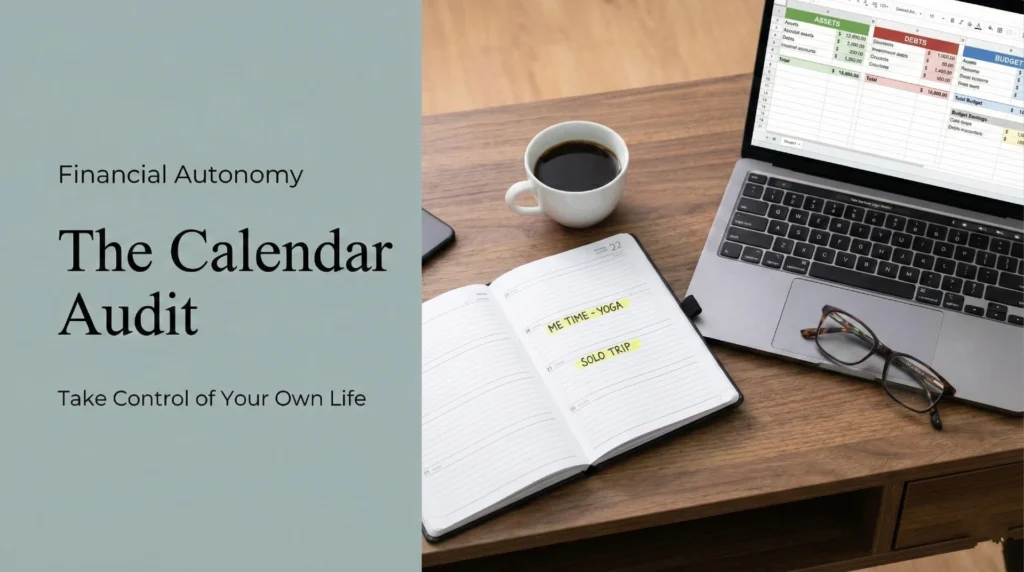
Pivoting from “We” back to “Me” isn’t selfish, it’s survival. Here’s how to start reclaiming your identity:
Step 1: The Calendar Audit
Pull out your calendar right now. Look at the last month. How many entries are for you? Not for your kids’ activities. Not for your husband’s work events. For you.
If your calendar is 100% kids and husband, you don’t have a life—you have a role. And roles are replaceable. Starting this week, schedule your joy first. Whether it’s a solo trip (like my hike in Fish Creek) or just an hour at a coffee shop, protect that time. It is medicine.
Step 2: Financial Autonomy
Even if you stay married, you need to know the numbers. What accounts do you have? What’s the balance? What debts exist? Knowledge is control. Women who know their numbers make better decisions. Women who don’t know their numbers make desperate ones. (See my FAQ on Divorce Myths for more on financial preparation).
Step 3: Emotional Boundaries
This is the most difficult step, but it’s also the most powerful: refuse to let your partner’s bad mood ruin your good day. His anger is his responsibility to manage. His disappointment is his emotion to process. You can acknowledge his feelings without absorbing them as your own.
When the Relationship Doesn’t Fit the New You
Here’s what happens when you start building your own life: your partner will likely push back.
If your relationship is healthy, your partner will ultimately support your growth. But if your relationship is toxic or controlling, your partner will resist. They’ll punish you with silence or rage for daring to have a life outside their approval. This is when you realize: the relationship doesn’t fit who you’re becoming.
Affordable Divorce in Illinois
If you’re in Illinois and you’re realizing that reclaiming yourself might mean leaving your marriage, let’s talk strategy. Because here’s something most people don’t understand: clarity saves money.
When you know who you are, you don’t fight out of spite. You fight for what is fair. High-conflict divorces are expensive because they’re emotional wars. Strategic divorces are business transactions.
Building your own life now—even before you file—saves you thousands in legal fees later. You enter the process as a whole person negotiating a fair settlement, not a broken person seeking vindication.
The Ripple Effect: How Your Strength Helps Others
Help a Friend Through Divorce
When you model this behavior—building a life around yourself—you show the people in your life what’s possible.
I recently had dinner with a friend who is coming out of a tough breakup. She had the amazing realization that too many people never reach: she is the only one who can make herself happy. Watching her embrace that truth was a reminder that our strength permits other women to reclaim theirs.
The best way to help a friend isn’t to trash-talk her ex. It’s to encourage her to find herself again. Remind her that she is the protagonist of her own story.
Frequently Asked Questions
Q: How do I stop losing myself in my relationship?
Start by identifying what you’ve lost. What did you used to love doing? Make a list, then slowly start reclaiming those pieces. You don’t have to reclaim everything at once—start with one thing this week.
Q: Can a marriage survive if I start being more independent?
A healthy marriage not only survives independence—it thrives on it. However, if your marriage is built on control or codependency, your independence will threaten the dynamic. That’s not a reason to stay small; it’s information about whether this relationship can evolve with you.
Q: What is the difference between selfishness and self-care?
Selfishness is disregarding others’ legitimate needs. Self-care is meeting your own needs so you can show up fully. As I learned in my own divorce story, prioritizing your well-being allows you to be a better partner, parent, and person.
Conclusion: Your Life Is Waiting
Sir Thomas Browne was right: we carry within us the wonders we seek around us.
You don’t need to find yourself in a new relationship or a new job. You need to remember that you never actually lost yourself—you just buried yourself so deep beneath the roles of Wife and Mother that you forgot where to look.
If you don’t know who you are outside of “Wife” or “Mom,” we need to talk. My coaching program isn’t just about ending marriages; it’s about beginning you.
Contact me today to start your Smart Start journey. The life you’re seeking is already within you. Let’s uncover it together.
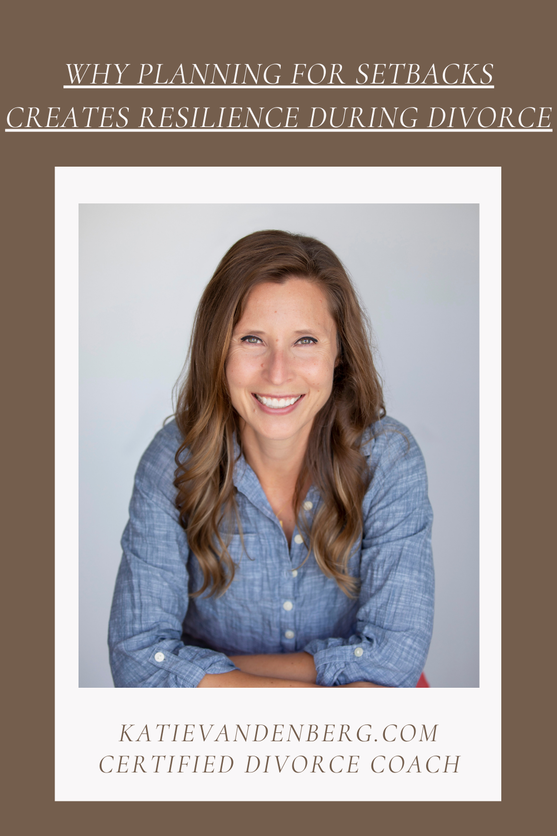
Katie VandenBerg is a CDC Certified Divorce Coach® specializing in high-conflict co-parenting and strategic divorce planning in Central Illinois.