
By Katie VandenBerg, CDC Certified Divorce Coach® | Focused Forward
Quick Answer: How to Ask for a Divorce: The most effective way to ask for a divorce is to frame the conversation as a notification of a decision, not a request for permission. Prioritize safety first: if there is a history of abuse, create a safety plan and consider a public location. When speaking, use a concise script that states your decision clearly (“I have decided to end our marriage”) and avoid the urge to Justify, Argue, Defend, or Explain (JADE). Clarity is the ultimate kindness.
Introduction: You Are Not Asking for Permission
You’ve practiced this conversation in the shower a hundred times. You’ve rehearsed the words while driving to work, lying awake at 3am, sitting in your car in the driveway before walking inside. You know exactly what you want to say, but the moment you imagine actually saying it, your throat closes up.
I get it. As a CDC Certified Divorce Coach®, I’ve helped hundreds of clients prepare for this exact moment—the moment they need to tell their spouse it’s over. And here’s the first thing I need you to understand about how to ask for a divorce: you’re not asking.
Asking implies they can say no. Asking implies you need their permission or agreement. You don’t.
In Illinois and across the United States, divorce is a unilateral decision. One person deciding the marriage is over is enough to end it legally. What you’re actually doing when you have this conversation is delivering news, not opening a debate. You are notifying them of a decision you’ve already made.
Does that sound harsh? Maybe. But clarity is kindness. The cruelest thing you can do is be ambiguous, leaving them with hope that you might change your mind if they just try harder, promise to change, or beg long enough. Ripping the band-aid off is more humane than a slow peel.
If you’re still uncertain about whether divorce is the right decision, that’s a different conversation. But if you’ve done the soul-searching, tried therapy, spent months or years knowing deep down that this marriage is over—then what you need now isn’t courage to ask. It’s a strategy to tell. (If you are still weighing the pros and cons, read my guide on 10 questions to ask your spouse before filing first).
How to Know When to Get a Divorce
Before you sit down to talk, you need to be 100% certain. If you are wavering during the conversation, it will send mixed signals. If you are still asking “when is divorce the right answer?”, look for these three clear signs:
- Indifference: You no longer care enough to fight. The opposite of love isn’t hate; it’s indifference.
- Contempt: You or your spouse treat each other with disdain, eye-rolling, or mockery rather than basic respect.
- Safety Issues: There is physical, emotional, or financial abuse present.
If you recognize these signs, the time for “working on it” has likely passed.
Preparation: Safety and Timing Before the Talk
Before you say a single word, you need to prepare. This isn’t just emotional preparation—though that matters too. This is practical, strategic preparation that protects you and sets up what comes next.
Safety First: When the Conversation Requires a Different Strategy
If there is any history of physical abuse, emotional abuse, controlling behavior, or narcissistic patterns, do not have this conversation without a safety plan in place. This is critical. I mean it.
Some spouses react to the loss of control by escalating. They may become violent, threatening, or engage in financial sabotage (draining accounts, hiding assets, racking up debt). If your gut tells you that telling your spouse could put you or your children in danger, trust that instinct.
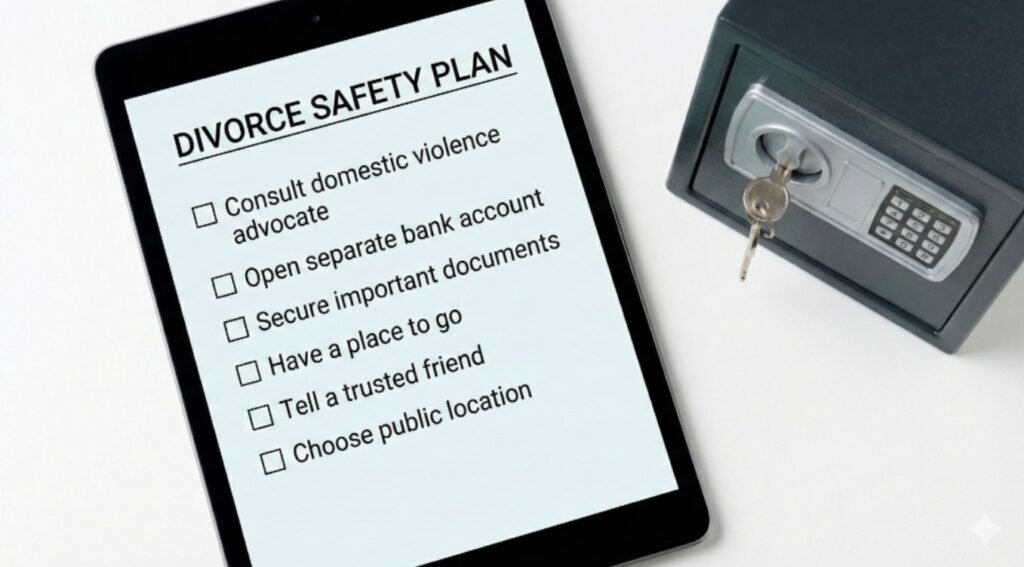
Safety planning steps:
- Consult with a domestic violence advocate before the conversation (National Domestic Violence Hotline: 1-800-799-7233)
- Open a separate bank account in your name only
- Secure important documents (birth certificates, passports, financial records) somewhere safe outside the home
- Have a place to go immediately if you need to leave
- Tell a trusted friend or family member the date and time you’re having the conversation
- Consider having the conversation in a public place or with a mediator present
If you are in an abusive relationship, the safest approach may be serving divorce papers through an attorney rather than having a face-to-face conversation at all. Your safety trumps everything else.
Timing: When to Have the Conversation
Choose a calm, neutral time when both of you are sober, not exhausted, and not already stressed about other issues. Not on a Friday night after drinks. Not right before a major holiday. Not the morning before they have a big work presentation.
The best timing is usually:
- Mid-week, early evening when you’re both home
- After the kids are asleep or when they’re not home
- Not during a fight or immediately after one
- Not on anniversaries, birthdays, or holidays (obvious, but people still do this)
You want to choose a moment when they can actually hear what you’re saying, not a moment when they’re already emotionally dysregulated or distracted.
Location: Public vs. Private
For safety concerns, choose a public location like a quiet coffee shop or park. For dignity and privacy, choose your home when children aren’t present. There’s no perfect answer here—it depends on your specific situation.
Public places offer:
- Safety if you’re concerned about violent reactions
- Built-in witnesses if things escalate
- A natural time limit (you can leave)
Private places offer:
- Dignity and privacy for both of you
- Space to have an emotional reaction without an audience
- Ability to discuss immediate logistics (who’s sleeping where tonight)
If you’re genuinely concerned about safety, public wins every time. If your marriage has been distant but not dangerous, private allows both of you to process without humiliation.
The Script: Exact Words to Use
Here’s what most people do wrong: they over-explain. They try to soften the blow with lengthy justifications. They invite negotiation by saying things like “I’ve been thinking maybe we should…” or “I’m not sure this is working…”
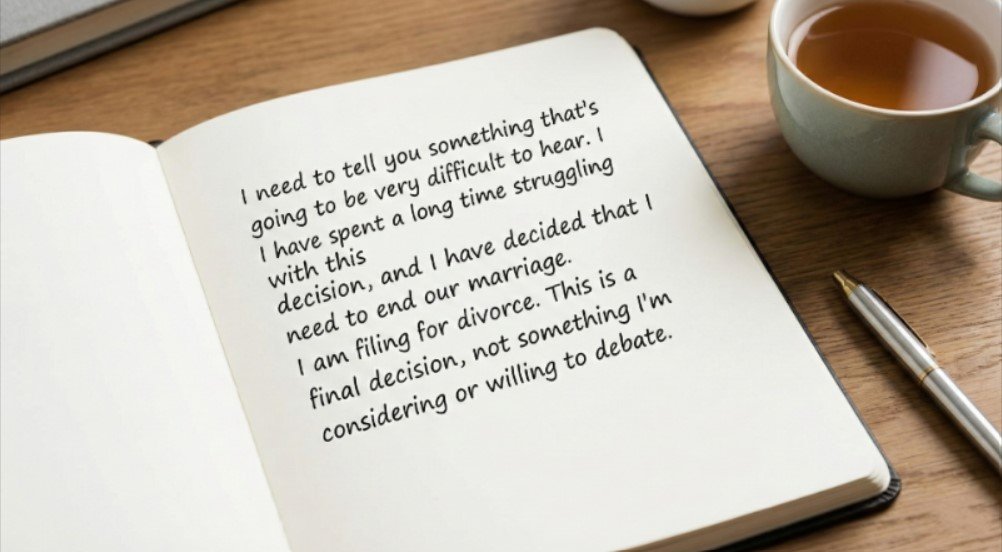
Don’t do that. Use what I call the “Bottom Line” technique: lead with the decision, be brief, and stay firm.
The Script: “I need to tell you something that’s going to be very difficult to hear. I have spent a long time struggling with this decision, and I have decided that I need to end our marriage. I am filing for divorce. This is a final decision, not something I’m considering or willing to debate. I know this is painful, and I’m sorry for the hurt this will cause, but this is what I need to do.“
That’s it. Short. Clear. Final.
Notice what’s not in that script:
- No lengthy explanation of why
- No listing of grievances
- No blaming or accusations
- No invitation to convince you otherwise
💡 Pro Tip: Don’t JADE
JADE stands for Justify, Argue, Defend, or Explain. When you tell your spouse you want a divorce, your instinct will be to justify your reasons, argue about who’s at fault, defend your decision against their objections, or explain every factor that led you here.
Don’t. Every explanation you give becomes something they can argue against. “You say I don’t listen—I’ll listen more.” “You say we’ve grown apart—we can grow back together.” “You say you’re unhappy—I’ll make you happy.”
State the decision. Hold the boundary. You don’t owe them a dissertation on why. You owe them honesty that it’s over. (This kind of emotional discipline is key to building resilience during divorce).
Handling the Reaction: The 3 Most Common Responses
No matter how well you prepare, you cannot control how your spouse reacts. But you can prepare for the most common responses so you’re not caught off guard.
1. The Shock/Grief Response
Even if your marriage has been struggling for years, your spouse may be genuinely blindsided. This happens more often than you’d think, especially if you’ve been hiding your unhappiness well. They may cry, beg, ask how you could do this, say they had no idea things were this bad.
How to respond: Hold space for their pain without retracting your decision. “I understand this is devastating. I’m so sorry. But this is not a decision I made lightly, and it is final.”
Do not comfort them physically if that will send mixed signals. Don’t say things like “Maybe someday…” or “I still care about you so much…” if those statements leave room for hope. Be compassionate, but be clear.
2. The Anger/Attack Response
Some spouses immediately go to anger—blaming you, attacking your character, bringing up every mistake you’ve made in the past 10 years. They may yell, throw things, call you names, threaten you financially or legally.
How to respond: Stay calm and leave the room if it escalates. “I understand you’re angry. I am going to give you space to process this. We can talk about next steps when we’ve both had time to calm down.”
If they become physically threatening, leave immediately. Go to a friend’s house, a hotel, anywhere safe. Do not engage with rage. You cannot reason with someone in that emotional state. This is also why having a safety plan matters. If your spouse has a history of explosive anger, you should have already secured a place to stay and important documents before this conversation.
3. The Bargaining Response
This is the “Can we try counseling?” or “Give me six months to change” response. They promise to fix everything, to be different, to work on the marriage.
If you are 100% done, here’s how to respond firmly: “I appreciate that you’re willing to work on things, but I have already spent years trying. I am not willing to go to counseling or give this more time. My decision is final.”
If you’re not 100% sure and you’re open to a trial separation or one last attempt at therapy, that’s different. But if you’ve already done that work—if you’ve been to counseling, read the books, had the conversations—don’t let bargaining derail you. Staying simply because you have invested years into the relationship is a classic example of the sunk cost fallacy in divorce; don’t let the fear of ‘wasted time’ dictate your future.
Be honest: “I have already tried everything I know how to try. I am done.”
| 💡 Pro Tip: You Don’t Owe Them a Debate Your spouse may want to dissect the marriage, relitigate old arguments, demand you explain every reason you’re leaving. You do not have to do this in the moment you tell them. “I’m not going to get into all of that right now. This is my decision. We can discuss logistics when we’re both calmer.” Protect your energy. You don’t owe them closure on their timeline. |
The “Business Transaction” Shift: What Happens Next
The moment you say the words “I want a divorce,” the marriage is emotionally over and the business partnership dissolution begins. This is where strategy becomes critical, especially in a high net worth divorce where financial stakes are significant.
Immediate Boundaries: Logistics for the First 24 Hours
You need to establish immediate boundaries about sleeping arrangements, finances, and communication. Do not assume you can just keep living together as roommates while you “figure things out.” That rarely works.
Sleeping arrangements:
- “I’ll sleep in the guest room starting tonight.”
- “I’m going to stay with my sister for a few days while we both process this.”
- “I think it would be best if you stay somewhere else for the time being.”
In Illinois, you cannot legally force your spouse to leave the marital home without a court order, so if they refuse to leave and you’re the one who wants out, you may need to be the one to go. Consult with an attorney before making any assumptions about who stays and who goes.
Financial boundaries:
- Do not drain bank accounts, but do open a separate account in your name only
- Document all current balances (bank accounts, retirement, debts)
- Stop using joint credit cards for anything except essentials
- Consult an attorney immediately about protecting assets
Communication boundaries:
- “I think it’s best if we communicate through email or text for now, not in person.”
- “I need some space. I’ll reach out in a few days to discuss next steps.” (If you have children, this is where adopting specific apps for co-parenting can save your sanity).
The goal is to create enough distance that you can both start thinking clearly instead of staying in the emotional chaos.
What If You’re Not Filing Immediately?
If you’re telling your spouse you want a divorce but you’re not ready to file the paperwork yet—maybe you need to get finances in order, maybe you’re considering a trial separation—you need a plan. This is exactly what my Smart Start 90-Day Program is designed for. We create a strategic roadmap for the transition period so you’re not just drifting in limbo, and so your spouse doesn’t use that time to manipulate or sabotage.
Frequently Asked Questions
How do I ask for a divorce nicely?
There is no “nice” way to break someone’s heart. But there is a dignified way. Clarity is kindness. Don’t sugarcoat it with “maybe” or “I think” language. Don’t drag it out with long explanations. Be direct, be firm, and be respectful. “I have decided to end our marriage” is kinder than “I’m thinking maybe we should take a break and see how we feel in six months.” The first statement gives them reality to process. The second gives them false hope.
Should I have a lawyer before I tell my spouse I want a divorce?
Yes. Always consult with a family law attorney before you tell your spouse. You need to understand your rights regarding the house, custody, finances, and assets before you say anything. An attorney can advise you on what not to do (like moving out of the house if you want custody, or draining joint accounts). You don’t necessarily need to have already hired an attorney or filed paperwork, but you should absolutely have had at least one consultation so you know what to expect and what to protect. (Learn more about why you need a team in my post on why you need a certified divorce coach).
What if my spouse refuses to leave the house?
In Illinois, you cannot force your spouse to leave the marital home without a court order, even if you’re the one who wants the divorce. Both of you have equal legal right to remain in the home until a judge says otherwise. If you feel unsafe, you should be the one to leave and seek a protective order. If it’s simply uncomfortable but not dangerous, you may need to establish in-home boundaries (separate bedrooms, minimal interaction) until you can get a temporary court order or one of you voluntarily moves out. This is why consulting an attorney before the conversation is so important.
What if my spouse threatens to take the kids?
In Illinois, neither parent can legally take the children and disappear without facing serious legal consequences. If your spouse threatens to take the kids out of state or keep them from you, immediately contact an attorney and file for an emergency custody order. Document the threat (via text or email if possible). Do not retaliate by doing the same thing. Keep the children on their normal schedule and maintain stability. The courts look very unfavorably on parents who use children as weapons during divorce.
Should I tell the kids before I tell my spouse?
No. You tell your spouse first, then you tell the children together if possible. Kids should hear this news from both parents in an age-appropriate way, with both of you presenting a united front that the divorce is not their fault and both parents love them. If your spouse is likely to tell the kids out of anger or spite immediately after you tell them, you may need to have a conversation with your spouse about how and when you’ll tell the kids together. If co-parenting communication is completely broken, you may need a therapist or mediator present when you tell the children.
What if I change my mind after I tell them?
If you say the words “I want a divorce” and then take it back a week later, you’ve done significant damage to trust and credibility. Your spouse will never fully believe you’re committed to the marriage going forward, and you’ve taught them that your ultimatums don’t mean anything. If you’re genuinely unsure, do not have this conversation yet. Work with a therapist or divorce coach to get clarity first. But if you’re sure, commit to the decision and follow through. Changing your mind repeatedly creates a destructive cycle.
Should I hire a lawyer before I ask?
Yes. Even if you want mediation, having legal counsel beforehand helps you understand your rights and gives you the confidence to stand firm during the conversation.
How do I ask for a divorce nicely?
There is no “nice” way to break someone’s heart, but there is a dignified way. Clarity is kindness. Don’t sugarcoat it with “maybe” or “I think” language, and don’t drag it out with long explanations. Be direct, be firm, and be respectful.
Using the direct script I shared above is actually the kindest thing you can do because it eliminates false hope. The kindest action is to allow both of you to start healing immediately rather than lingering in uncertainty.
Conclusion: The Relief Is Coming
I know this feels impossible right now. The anticipation of this conversation is often worse than the event itself. The weight of carrying this secret, the exhaustion of pretending everything is fine, the dread of finally saying the words—it’s crushing.
But here’s what I’ve seen over and over with my clients: once the words are out, there is relief. Even in the pain, even in the chaos of what comes next, there is relief in no longer living the lie. There is relief in finally being honest. There is relief in taking action instead of staying frozen.
The conversation will be hard. There’s no way around that. Your spouse will be hurt, angry, shocked, devastated—maybe all of those at once. But you will survive it. You will walk out of that room, and the next chapter of your life will have officially begun.
Now that the secret is out, you need a plan. You can’t just float through the next six months hoping things work out. You need strategy, boundaries, and support. (Start by focusing on planning for life after divorce so you have a clear vision of what you are fighting for).
Join my Smart Start 90-Day Program to turn this decision into a strategic roadmap. We’ll organize your finances, prepare you for the legal process, establish co-parenting communication, and create a plan that protects both your kids and your future.
Because you didn’t make this decision lightly. And you don’t have to execute it alone. The relief is coming. Let’s build the path to get you there.
💡 Pro Tip: Write It Down First
Before you have the conversation, write down exactly what you want to say. Practice saying it out loud—in your car, in the shower, to a trusted friend. The more you rehearse, the less likely you are to freeze up or ramble when the moment comes. You don’t have to memorize it word-for-word, but knowing your opening line by heart helps you start strong.
About the Author Katie VandenBerg is a CDC Certified Divorce Coach® specializing in strategic divorce planning in Central Illinois. She helps women build efficient, effective divorce teams that protect their finances and their peace, as seen in her client success stories.