By Katie VandenBerg, CDC Certified Divorce Coach® | Focused Forward
| Planning for life after divorce requires dual preparation: building your ideal outcome while preparing for setbacks. Resilience during divorce emerges when you anticipate failures, rejected settlements, custody violations, and financial surprises before they occur. This strategic framework separates stable outcomes from reactive chaos. Using the Focused Forward method, CDC Certified Divorce Coaches help high-functioning professionals navigate the 80% emotional, 20% legal reality through business-minded financial planning, reputation management in small communities, breaking sunk cost fallacy, and tactical tools like BIFF communication and building a divorce Board of Directors. Strategic failure planning isn’t pessimism, it’s protection. |
Introduction
High-functioning professionals face identity dissolution when carefully constructed life plans collapse during divorce. You’re making critical custody, financial, and future decisions while experiencing emotional exhaustion. Resilience during divorce isn’t built by success planning alone; it’s built by failure planning. Anticipating setbacks, rejected settlements, biased reports, and financial manipulation, develops strategic consistency protecting dignity, reputation, and financial stability. Planning for life after divorce means building parallel tracks: your hoped-for outcome and contingencies, maintaining stability when plans fail.
Why Planning to Fail Builds Resilience During Divorce

Planning for life after divorce demands understanding. Plan A will likely fail, not from incompetence, but because divorce involves conflicting interests, slow legal systems, and unpredictable emotional dynamics. Success-only planning makes failure catastrophic. Dual-track planning transforms setbacks into strategic data points, enabling you to make informed decisions and activate your next move. Resilience during divorce means preparing emotionally and strategically for disruptions before they become crises.
The Failure of Plan A: What It Actually Looks Like
Common disruptions when planning for life after divorce: failed mediation (unreasonable ex terms, mediator bias, power imbalances), biased Guardian ad Litem reports (missed information, unfounded assumptions, unrealistic custody recommendations), repeated visitation cancellations (scrambling work-childcare arrangements), hidden financial manipulation (undisclosed debt, drained accounts, concealed assets), court delays (extended limbo months beyond expectations). These aren’t aberrations; they’re process realities. Anticipating setbacks separates stable outcomes from reactive chaos. Building resilience during divorce requires pre-crisis protocols.
Building Your Plan B: The Strategic Framework
Build resilience during divorce through this Plan B framework: (1) Identify three non-negotiables: custody time, financial protections, and critical assets. (2) Map worst-case scenarios with your attorney, litigation costs, timelines, and leverage. (3) Create emotional regulation protocols,24-hour response delays, calling a CDC Certified Divorce Coach, not your ex. (4) Build financial buffers for unexpected legal fees. (5) Establish BIFF communication boundaries: Brief, Informative, Friendly, Firm. The framework prevents catastrophic failure when planning for life after divorce.
| 💡 Pro Tip: The Decision-Making Pause: When planning for life after divorce, build mandatory pause periods before major decisions. Never sign settlement agreements without sleeping on them. Never respond to provocative messages within 24 hours. Never agree to custody arrangements in parking lots. Pressure tactics thrive on immediacy. Your Plan B thrives on deliberation. |
Financial Planning After Divorce: Treating It Like a Business Transaction
Divorce is a business transaction requiring emotional-financial separation. Planning for life after divorce demands operating in both spaces without contamination. When emotions drive financial decisions, you overpay, surrender guilt-driven assets, or fight for symbolic items exceeding actual value. Building resilience during divorce means treating financial dissolution with business-partnership discipline, protecting your post-divorce financial reality.
The Business Mindset for Post-Divorce Life
Approach financial planning after divorce with business discipline: Document everything, asset valuations (retirement accounts, real estate, vehicles, business interests), verified debt balances. Establish immediate financial boundaries, separate accounts, close joint credit cards, and remove authorizations. Calculate realistic post-divorce budgets accounting for dual-household expenses. Evaluate assets by future value, not emotional attachment. Plan for tax implications with divorce-specialized financial advisors. Settlement negotiations determine long-term financial reality, make data-driven decisions, not emotional ones.
The Cost of Emotional Financial Decisions
Emotional decisions inflate divorce costs. Clients spend $40,000 fighting over $15,000 furniture, emotional symbolism, not financial value. Every midnight attorney emails bills at premium rates. Building resilience during divorce requires identifying emotion-driven cost inflation: identity-attached marital home fights causing financial strain, betrayal-based settlement refusals, using attorneys as therapists versus CDC Certified Divorce Coaches, and guilt-driven asset surrenders. Smart Start program addresses divorce strategy and emotional regulation, essential dual support, preventing expensive reactive mistakes when planning for life after divorce.
| 💡 Pro Tip: The ‘Would I Pay This Price?’ When planning for life after divorce, before fighting for any asset, ask: ‘If buying this new asset today, would I pay the legal fees I’m about to spend fighting for it?’ If no, release it. You’re making strategic choices protecting your financial future, not abandoning rights. |
Planning for Life After Divorce in Small Towns: The Reputation Factor
Planning for life after divorce in small towns requires managing parallel divorces: legal and public. Reputation impacts business relationships, children’s social standing, and daily community navigation. Building resilience during divorce demands active reputation management through strategic composure. You cannot control talk, but you can control the information provided and public conduct.
Strategic Composure in Public Spaces
Public encounters with your ex require protocols when planning for life after divorce. Maintain neutral scripts: ‘We’re working through it respectfully. I appreciate your support.’ No details, blame, or explanations. Keep ex interactions brief and civil; simple nods or hellos suffice. Have exit strategies when composure slips. Never vent publicly, on social media, in coffee shops, kids’ events. Reserve raw emotion for therapists, coaches, and trusted confidential friends. Strategic composure protects reputation assets critical for building resilience during divorce in small communities.
Protecting Your Children’s Social Standing
Children inhabit the same small-town fishbowl. Planning for life after divorce means protecting them from public narrative collateral damage. Never badmouth their other parent where they can hear, including before friends or family. Don’t make them messengers; all ex communication flows through you or your attorney directly. Maintain routine normalcy, sports, activities, and friend groups provide stability. Model healthy emotional regulation. Children’s resilience during divorce ties directly to yours; protecting your emotional stability protects theirs.
| 💡 Pro Tip: The ‘Gray Rock’ Strategy: When planning for life after divorce in high-conflict situations, become uninteresting as a gray rock. Provide no emotional reaction, no engaging information, no drama. Especially effective in small towns where gossip thrives on conflict. Boring is strategic. Boring protects you. |
Planning for the Future: Breaking the Sunk Cost Fallacy
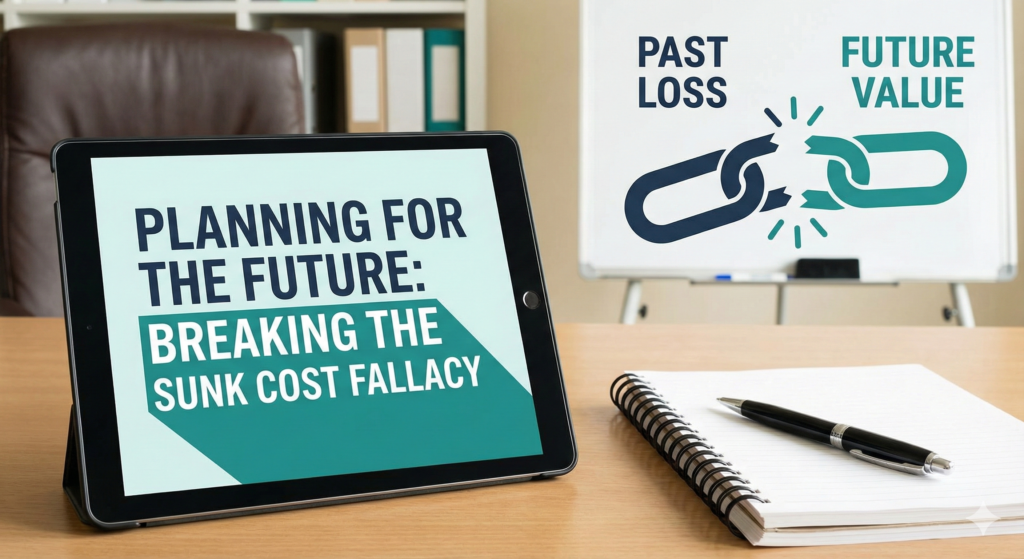
The sunk cost fallacy, continuing investment because you’ve already invested much, destroys effective planning for life after divorce. In past years, money, sacrifices have already been spent. Fighting harder cannot recover them. Only relevant question: what decision protects your future? Breaking this fallacy builds resilience during divorce through forward-focused decision-making, not backward-looking justification. (56 words)
Break the sunk cost fallacy: Evaluate decisions by future value, not past loss. Reframe marriage years as teaching experiences, providing self-knowledge, valuable forward assets. Accepting compromises, enabling stability, beats protracted emotional-financial battles. Recognize Plan B as often superior, choosing peace and forward motion over vindication. Clients stuck for years cannot release past losses. Life continues. Resilience during divorce means moving forward when planning for life after divorce.
Practical Strategies for Building Resilience During Divorce
Building resilience during divorce requires tactical tools deployed when emotions threaten planning for life after divorce.
The BIFF Communication Method
Use BIFF for all ex communication, especially high-conflict situations: Brief (1-2 paragraphs maximum preventing misinterpretation), Informative (facts only, ‘Pickup 5 PM Friday school’, not emotions,’ You’re always late’), Friendly (civil not warm, ‘Thanks for coordinating’ models professionalism), Firm (state needs clearly then stop,’ Need signed forms Tuesday’, no justifications inviting pushback). Essential when planning for life after divorce, it keeps interactions transactional, reduces volatility, creates positive legal paper trails, and builds resilience during divorce.
Building Your Divorce Board of Directors
Planning for life after divorce requires assembling your Board of Directors with distinct roles: Attorney (legal strategy, paperwork, court representation, not midnight crisis calls), CDC Certified Divorce Coach (strategic thinking partner bridging emotion-decision gaps, mediation preparation, non-negotiables identification, decision fatigue management, fraction of attorney costs, prevents expensive emotional mistakes), Therapist (trauma processing, grief, identity collapse, deep healing), Divorce-specialized financial advisor (tax implications, retirement splits, long-term planning), Trusted confidential friends (judgment-free listening). Role clarity prevents expensive confusion and builds resilience during divorce.
Self-Care as Decision Protection
Self-care isn’t indulgence, it’s decision protection. Exhaustion, malnutrition, adrenaline shuts down your prefrontal cortex, governing rational decisions. You become reactive, signing bad agreements, sending regretful emails, and making fatigue-driven concessions. Planning for life after divorce requires cognitive function protection: Sleep (7-8 hours non-negotiable), Nutrition (regular meals fuel decisions), Movement (20-minute walks regulate cortisol, reset nervous system), Process breaks (schedule non-divorce focus time). Make maintenance time now or crisis time later. Building resilience during divorce requires protecting your body to protect your decisions.
| 💡 Pro Tip: The Post-Decision Recovery Period: After major decisions, settlement signings, court appearances, and difficult mediations, schedule recovery time. Not productive work. Not crisis management. Just decompression space. This prevents decision fatigue compounding and maintains resilience during divorce when the next challenge inevitably arrives. |
Frequently Asked Questions
How do I start planning for life after divorce when I’m still in crisis mode?
Stabilize the crisis first, not the entire future. Planning for life after divorce begins with immediate needs: separating finances, establishing custody arrangements, and securing housing. Work with a CDC Certified Divorce Coach to build a 90-day roadmap addressing urgent priorities while laying groundwork for longer-term resilience during divorce. You need next steps visibility, not complete path clarity.
What if my ex refuses to follow our agreed-upon plans?
This exemplifies why failure planning equals success planning in importance. Document every violation. Use the BIFF Method for all communication. Inform the attorney immediately. Don’t engage in arguments or attempt to force compliance yourself. When planning for life after divorce, anticipate non-compliance, build enforcement mechanisms into settlements from the start. Parallel parenting strategies reduce cooperation dependence for building resilience during divorce.
Is it worth hiring a divorce coach if I already have an attorney?
Absolutely. Attorney handles legal strategy at $300-500/hour. CDC Certified Divorce Coach costs significantly less, handling emotional regulation and strategic decision-making, preventing expensive mistakes. When planning for life after divorce, most need both: legal expertise for transactions, and coaching support for emotional complexity. Money saved by avoiding emotionally reactive decisions typically pays for coaching many times over. Building resilience during divorce requires a dual support structure.
How do I protect my children while planning for life after divorce?
Children thrive seeing adults manage hard things with dignity. Maintain their routines. Never badmouth the other parent before them. Don’t use them as messengers or confidants. Let them see you getting appropriate adult support, a coach, a therapist, or trusted friends. Building resilience during divorce for kids means demonstrating healthy emotional regulation, not shielding them from divorce reality. Be age-appropriately honest, maintain stability, model coping strategies you want them learning.
Key Takeaways
Planning for life after divorce isn’t about perfection or certainty; it’s about building strategic resilience during divorce, allowing adaptation when plans fail:
• Failure planning equals success planning in importance. Divorce involves unpredictable behavior, slow legal systems, and emotional volatility; building resilience during divorce means preparing for setbacks before crises.
• Financial planning after divorce requires emotion-transaction separation, treat asset division as business dissolution, not worth validation; track where emotion inflates legal costs.
• Small-town divorce demands active reputation management, strategic composure, neutral scripts, protecting dignity, and children’s social standing are essential when planning for life after divorce in tight-knit communities.
• Break sunk cost fallacy by evaluating decisions on future value, past investments can’t be recovered through continued fighting; true resilience during divorce means refusing to let losses dictate planning.
• Build a Board of Directors with clear roles, an attorney for legal strategy, a CDC Certified Divorce Coach for emotional regulation and decision support, a therapist for healing, and trusted confidential friends. Role clarity prevents expensive confusion when planning for life after divorce.
Conclusion
Planning for life after divorce forces confronting the uncomfortable truth: success isn’t guaranteed. Exes might not cooperate. Courts might not rule favorably. Mediation might fail. Carefully constructed plans might collapse. But you control your response when failures happen.
Build resilience during divorce by anticipating setbacks and creating management protocols. Treat financial decisions as business transactions, not emotional vindication. Protect community reputation through strategic composure. Break free from sunk cost fallacy, making choices based on future value, not past loss.
Planning for life after divorce isn’t about denying reality or pretending pain doesn’t exist. It’s about refusing to let chaos dictate your future. It’s validating grief while building a strategy, carrying you through to stability. The Focused Forward approach helps you navigate the 80% emotional, 20% legal divorce reality without letting emotions destroy legal outcomes.
Resilience during divorce isn’t a personality trait you either possess or lack. It’s a skill set that can be taught, practiced, and mastered. You don’t have to figure it out alone mid-crisis.
You don’t have to do this alone. If you’re ready to build your roadmap for planning for life after divorce, let’s begin with my Smart Start 90-Day Program. Together, we’ll get you organized, strategic, and Focused Forward, because you deserve to emerge from this divorce with your dignity intact and your future protected.
About the Author
Katie VandenBerg is a CDC Certified Divorce Coach® and founder of Focused Forward, based in Central Illinois. She specializes in helping high-functioning professionals navigate emotionally complex divorces while protecting their dignity, reputation, and financial stability. Her Smart Start Program provides 90-day strategic roadmaps for planning for life after divorce. Learn more at katievandenberg.com/